
Part 5 of this 5-day series was created with contributions from and thoughtfully reviewed by Dr. Stella Anakwe-Umeh (MBBS, MSc Public Health, MRCPsych), whose insight and care have helped shape its message and impact.
Exact Scripts for Every Awkward, Tender, Terrifying Moment
You have read the research. You understand the practices. Now, these scripts will show you how to put both into words when it matters most.
Why you ask?
Because you have been showing up consistently, patiently, with unconditional regard. But there are moments that demand more than steady presence. Moments when you need to speak; to name what you see, to invite reflection, to break a pattern that has been running on autopilot for years.
These conversations are terrifying. Not because you don’t know what to say. Because you know how much is at stake.
These scripts are not meant to be memorized or recited verbatim. They are templates; frameworks you adapt to your voice, your relationship, and the specific person you love.
Use them. Revise them. Practice them until they feel like your own.
Then, when the moment comes, you will be ready.
Before You Speak: The Timing Principles
Do NOT have these conversations when:
- Either of you is exhausted, hungry, or stressed.
- You are in public or semi-public spaces.
- You are feeling frustrated, resentful, or critical.
- Right before they need to perform or deliver something.
- When they are already in acute distress.
DO have these conversations when:
- You have uninterrupted privacy.
- There is no time pressure.
- You are feeling grounded and compassionate.
- They are relatively calm and receptive.
The container matters more than the words.
Scrift For Scenario A: They Just Dismissed a Compliment
When to use this: Immediately after they deflect, negate, or explain away something positive you said about them.
Why it works: You are not arguing. You are observing a pattern and inviting awareness; not demanding change.
The Script
“Can I pause us for a second?
I noticed when I said [specific compliment], you immediately [deflected/explained it away/made a joke].
I don’t think you realize how often you do that; push away good things people see in you. I’m not trying to make you uncomfortable. I just want you to know that I mean what I say, and I’d love for you to practice just letting it land.
You don’t have to do anything with it. You don’t have to agree with it. You don’t even have to believe it. Just let it sit there for a second before you push it away.
That’s all.”
If They Respond Defensively
They say: “I wasn’t pushing it away. I was just saying…”
You say: “You’re probably right. I might be over-sensitive to it because I notice it so often. But even if I’m wrong about this moment; do you think there’s any truth to the pattern?”
Scrift For Scenario B: They Have Just Failed or Made a Mistake
When to use this: In the immediate aftermath of disappointment: a rejected application, a poor grade, a conflict they regret, a public error.
Why it works: It offers presence, not pressure. It separates the event from the identity. It gives them permission to hurt without having to perform resilience.
The Script
“I know this hurts right now. I’m not here to cheerlead. I’m not going to tell you it doesn’t matter, because I know it does.
I just want you to know: this is one moment. It is one attempt. One outcome. One data point in a lifetime of data points.
It is not a verdict on who you are or what you’re capable of. When you’re ready; and there’s no rush, I’d love to help you think through what’s next. What you want to learn from this. What you want to try differently.
But right now, I’m not here to fix it. I’m just here.”
If They Say “I Should Have Done Better”
You say: “Probably. There’s almost always something we could have done differently. That doesn’t mean you failed as a person. It means you’re human, and you’re learning, and this particular attempt didn’t go the way you hoped.”
Scrift For Scenario C: They Say “I Don’t Know” When Asked Their Preference
When to use this: You ask where they want to eat, what movie to watch, what to do this weekend. They shrug, deflect, or say “I don’t mind.”
Why it works: You name the pattern without accusation. You explicitly contradict the belief that their preferences are invalid. You give them permission to have; and express wants.
The Script
“I notice you often say ‘I don’t know’ when I ask what you want.
And I get it; sometimes you genuinely don’t have a preference. Sometimes you really don’t care, and that’s fine.
But I also wonder if somewhere along the way, you learned that your preferences don’t matter as much as other people’s. That what you want is less important, or that wanting something makes you difficult.
I want you to know that’s not true in this relationship. If you have even a small leaning; even just ‘I’m not in the mood for Italian’, I genuinely want to know it.
And if you genuinely don’t have a preference, that’s okay too. But I want you to have the option. I want you to feel like your voice belongs here.”
If They Still Deflect
They say: “I really don’t care. You choose.”
You say: “Okay. But I’m going to check in with you again next time. Not to pressure you; just to remind you that your opinion matters here.”
Scrift For Scenario D: You Are Naming the Concern Directly
When to use this: You have decided to address the broader pattern of low self-esteem, not a single incident. This is the “meta-conversation.”
Why it works: You are not asking them to perform insight or gratitude. You are witnessing and naming. This alone can be profoundly disarming.
The Script
“I want to say something that might feel a little heavy. I hope you’ll hear it the way I mean it.
I’ve noticed over these past months that you often don’t seem to see yourself the way I see you.
You minimize your accomplishments. You assume people are disappointed in you. You struggle to believe good things people say about you.
I’m not saying this to critique you or to make you feel analyzed. I’m not asking you to defend yourself or explain why you feel this way.
I’m saying it because it hurts me to watch you carry this weight. I’m saying it because I want you to experience yourself the way you actually are; not the way your inner critic tells you, you are.
I don’t need you to respond. I don’t need you to fix anything. I just wanted you to know that I see it, and I’m here.
That’s all.”
If They Cry
Do not panic. Do not rush to reassurance. Do not say “I didn’t mean to make you upset.”
Wait. Let them cry. Let them feel the relief of being seen.
When they are ready, you can say: “I’m glad you’re letting yourself feel this. You don’t have to hide it from me.”
Scrift For Scenario E: Suggesting Professional Help
When to use this: You have observed one or more of the 8 warning signs from Part 4. You believe professional support is indicated.
Why it works: Reframes therapy as support, not punishment. Acknowledges their effort. Positions you as continuing, not withdrawing.
The Script
“I’ve been thinking about how hard you’ve been working on this.
Not just recently; for a long time. You’ve been carrying this weight, trying to figure it out, trying to feel better about yourself and your life.
And I see how much energy it takes from you every day. I wonder if having a professional in your corner; someone whose job it is to help people untangle these patterns, might lighten the load.
Not because anything is wrong with you. Not because I think you’re broken or crazy or too much.
But because you deserve support that’s as invested as I am, but with different tools. Different training. Different perspective.
What do you think?”
If They Say “I’m Not That Bad”
You say: “I know you’re not ‘that bad.’ This isn’t about severity; it’s about support. People see therapists for all kinds of reasons: to understand themselves better, to have a space that’s just for them, to learn tools their family never taught them. It’s not a verdict. It’s an investment.”
Scrift For Scenario F: The Friend Audit Invitation
When to use this: You suspect their social environment is reinforcing their low self-esteem. They frequently feel drained, anxious, or small after interactions with certain people.
Why it works: You are not attacking their friends. You are inviting curiosity about internal experience.
The Script
“Can I share something I’ve been thinking about?
I’ve started paying more attention to how I feel after I spend time with different people.
Some people leave me feeling lighter; more like myself, more energized, more seen.
Some people leave me feeling smaller. Drained. Like I have to earn their approval, or like I’m performing instead of connecting.
I wonder if you’ve noticed that too; not just with people in general, but with specific people in your life.
I’m not asking you to name names or make any decisions. I’m just curious: do you have people who leave you feeling lighter? And are there people who consistently leave you feeling smaller?”
If They Open Up
Listen. Reflect. Do not problem-solve.
“It sounds like [name] really drains you.” “That must be exhausting.” “I understand why you’d feel conflicted about that friendship.”
A Final Note on These Scripts
These words will not fix everything. They will not undo years of conditioning in a single conversation. They will not instantly transform how someone sees themselves. They will not guarantee that the person you love will hear you the way you intend.
But they will do something.
They will break the silence. They will name what has been unnamed. They will communicate, in language precise and tender, that you see them; not the persona they present, but the person beneath.
And that person, the one who has been waiting perhaps their entire life to be truly seen, will receive something irreplaceable.
Not certainty. Not cure. But company.
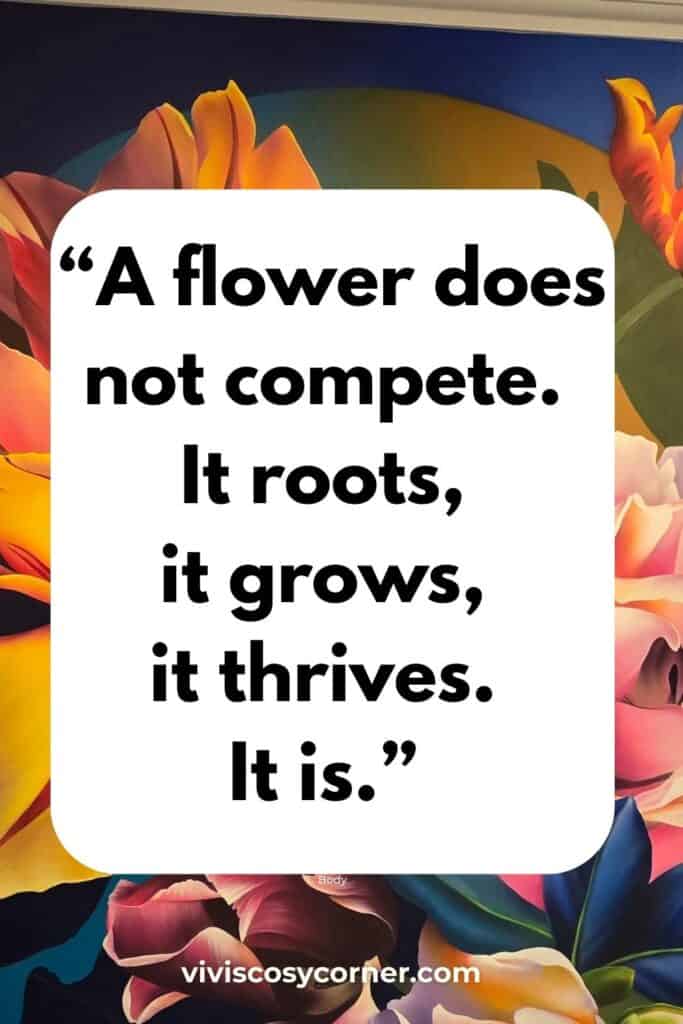
The Gardener, Not the Sun
The greatest gift you can offer is not to build their self-esteem for them, but to become a sanctuary where it feels safe to grow.
You are the gardener, not the sun.
You till the soil: clearing away the rocks of criticism, loosening the compacted earth of old wounds.
You provide water: consistent, patient presence that does not flood or withdraw.
You protect from harsh elements: buffering against relationships and environments that erode.
And you trust in the innate strength of the seed.
Every person, no matter how buried under evidence of their inadequacy, carries within them the capacity to see themselves truly. Your role is not to manufacture that capacity. It is to create conditions where it can emerge.
- By appreciating their essence, you remind them that their value was never conditional.
- By supporting their stumbles, you teach them that failure is data, not identity.
- By modeling self-respect, you show them what it looks like to inhabit oneself fully.
- By asking instead of telling, you return to them the authority over their own self-concept.
- By honouring their boundaries, you demonstrate that love does not require self-erasure.
- By encouraging small brave actions, you help them accumulate evidence of their own capability.
- By delivering compliments they can accept, you bridge the gap between your perception and theirs.
- By reframing their inner dialogue, you teach them the language of self-compassion.
- By creating the Victory Log, you give them a permanent record of their worth that they cannot argue with.
- By being patiently, quietly consistent, you become the reliable presence that slowly revises their model of what love looks like.
- By knowing when your role ends and the professional’s begins, you protect them; and yourself from the illusion that love alone is always sufficient.
FAQs: How to Talk to Someone With Low Self-Esteem
A: You won’t. One imperfect sentence doesn’t undo years of struggle. Silence does more harm than awkward honesty. Presence matters more than perfection.
Q2: When is the right time to start the conversation?
A: Choose calm, private, unhurried moments. Avoid stress, public settings, or emotional overwhelm. Timing shapes how your words land.
Q3: What if they shut down or walk away?
A: Don’t chase or force. Stay steady: “We can pause, I’m here when you’re ready.” Your calm consistency builds safety over time.
Q4: What if they react with anger instead of openness?
A: Anger often protects shame. Don’t defend or argue. Acknowledge, step back, and return later with the same steady care.
Q5: What if my words don’t reach them in emotional moments?
A: Drop the script, offer presence. Sit with them. Say less. “I’m here” is often more powerful than anything else.
Q6: How do I know if it’s a pattern or just a one-off moment?
A: Look for consistency. Repeated deflection, indecision, or self-criticism signals a deeper pattern; not just a passing mood.
Q7: Do I have to directly call out their low self-esteem?
A: Not always. Start gently. Use direct naming only if trust is strong and softer approaches haven’t worked.
Q8: How do I suggest therapy without sounding like I’m giving up on them?
A: Frame it as adding support, not replacing you: “I’m here, and I want you to have even more help than I can give.”
Q9: What if they think I’m trying to get rid of them?
A: Reassure clearly: “I’m not going anywhere. This is about giving you more support, not less.” Then prove it through your actions.
Q10: How do I adapt these scripts for different relationships?
A: Parents: respect generational differences and reframe language. For Partners: use full honesty with care. For Teens: keep it short, gentle, non-preachy.
Q11: What if they turn the conversation back on me?
A: Stay grounded. Don’t defend. Redirect calmly: “We can talk about me another time; I’m here because I care about you.”
Q12: What should I do after the conversation?
A: Give space. Follow up lightly: “I’m here, no pressure.” Then return to normal connection, consistency builds trust.
Q13: What if nothing changes after multiple attempts?
A: You can’t want their healing more than they do. Shift from fixing to simply being present; without losing yourself.
Q14: Can I use these scripts on myself?
A: Yes. Challenge your inner dialogue, accept compliments, name your patterns, and seek support. You deserve the same compassion.
Q15: What matters more; the script or how I show up?
A: The container matters more than the words. Calm, steady presence is what truly creates change.
Q16: What if I still don’t feel ready?
A: Start small. One sentence. One moment. One act of presence. You don’t need to be ready; you just need to begin.
Start Today
You do not need to master all 10 practices at once. You do not need to have all 6 conversations this week.
You do not need to be perfect. You need to begin.
Pick one warning sign you will watch for, one backfire habit you will stop, and one practice you will try this week.
Pick one script you will adapt and practice saying to yourself in the mirror. Then, when the moment comes; and it will come, you will be ready.
Not perfect. Not certain. Not guaranteed a particular outcome. But ready.
Be the gardener. Be the mirror. Watch the reflection change.
Thank you for being a VCC reader.
With gratitude to Dr. Stella Anakwe-Umeh (MBBS, MSc Public Health, MRCPsych), for her thoughtful contributions and review in shaping this series.


Leave a Comment